
Accessible Homes Week - Championing Inclusive and Adaptable Homes
This week is Accessible Homes Week and Laura Wood, founder of Invisible Creations, reflects on the theme - 'Ten Years On'.
Ten years ago I was working in communications for a social housing provider. At the time, I thought my role was about telling stories about homes, communities and the impact housing can have. What I didn’t realise then was that those stories would soon become my own.
Three years later I found myself on the National Housing Federation’s Greenhouse programme. It was there that the seed of an idea grew into something bigger than I could have imagined. That idea became Invisible Creations, the business I went on to co-found creating beautiful, inclusive and functional home adaptations that people not only need but actually want in their homes.

Invisible Creations wasn’t just a professional project. It was personal. My Gran was the inspiration behind our very first products. I watched her struggle to maintain her independence at home, not because she didn’t have the strength or spirit, but because the design of her home didn’t support her needs. The only options available were clinical and stigmatising and screamed “disability” when all she wanted was a home that felt like her own.
Her experience lit a fire in me. I realised that accessible design isn’t just about meeting needs. It’s about dignity, pride and choice. Why should people have to choose between safety and style? Why should our homes, which are meant to be our sanctuaries, work against us as we age or if our circumstances change?
Over the past decade I’ve been privileged to work at the intersection of housing, ageing and inclusive design. And I’ve seen first-hand that this isn’t just about grab rails or ramps. It’s about reimagining what homes can and should be, adaptable and inclusive spaces that grow and evolve with us throughout our lives.
The truth is we are all ageing. Accessible housing isn’t a niche issue. It’s universal. Every single one of us deserves a home that not only keeps us safe but helps us thrive.
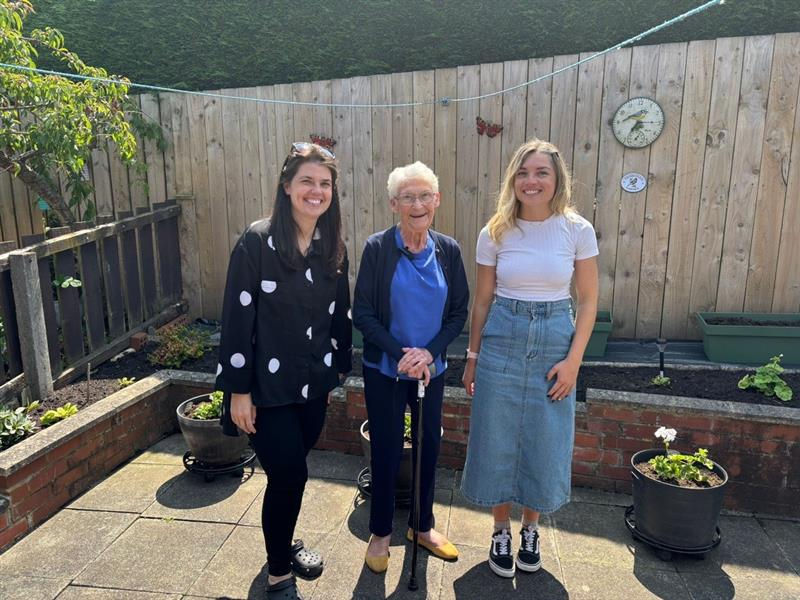
Recently I visited an independent living scheme in Durham where residents had Invisible Creations products installed. There I met a remarkable lady named Laura. In her late 90s and fiercely independent, Laura uses our bathroom adaptations to keep living on her own terms. The subtle supports we installed allow her to access and use her bathroom safely without help. She told me this freedom has kept her active and mobile. She even catches the bus to dance classes in the next village. Laura is a living testament to how accessible design empowers people to stay vibrant and connected.

Laura’s radiant smile, social spirit and joy reminded me so much of my Gran’s energy and reinforced something I have always believed. Accessible homes aren’t just about safety. They are about independence, joy and life continuing on your own terms.
But sadly, millions of people are not so lucky. Just seven percent of homes in England have the most basic accessibility features meaning ninety three percent simply aren't visitable for many disabled or older people. One report by Centre For Ageing Better estimates that up to 885,000 more people could be living in accessible and adaptable homes now if the government had implemented promised higher building standards such as step-free access. Only three percent of new homes approved in London last year were suitable for older or disabled people and fewer than one percent were designed for wheelchair users. Forecasts show that seventy percent of new homes over the next decade are not required to meet optional accessibility standards like M4(2) or M4(3).
I also want to share Jean’s story. I first met Jean two years ago when we were gathering insights to design new products. She was starting to struggle with her mobility and when she saw our toilet roll holder grab rail she shared how helpful it would be. Two years later Jean has had it installed for some time and it has made a huge difference. Without it she might remain stuck on the toilet, unable to stand, or even end up on the floor with a broken hip. She didn’t want a carer, a family member in her bathroom, or to move into a care home. She wanted something discreet, stylish and part of her home. As she put it, “Just because I struggle now, why should I have to compromise on my standards and choices?”
Jean’s words stay with me because this is what inclusive design is really about. Keeping people safe without taking away their pride, independence or identity. Yet for so many living in social housing, this dignity is still out of reach. There are 1.8 million households in England needing accessible housing yet the supply simply isn't meeting demand. According to Habingteg, some wheelchair users face waiting times of up to 47 years for a new-build accessible home. Disabled people are overrepresented in social housing yet far more likely to live in inaccessible, unsafe homes.
Social housing must go beyond decent homes. It must be dignified, adaptable and forward-thinking. Homes that respect people’s standards, support their independence and allow them to remain in the places they love even when needs change.
As we mark Accessible Homes Week my call to the sector is this:
Let’s stop treating accessibility as an afterthought
Let’s embed inclusive design into the very fabric of housing policy, planning and delivery
Let’s listen to the lived experiences of people like my Gran, Laura and Jean to understand what works and what doesn’t
When we design homes that are beautiful, functional and accessible we are not just building houses. We are building futures.
This is why I do what I do and why I will keep championing accessible and adaptable homes until everyone, no matter their age or ability, has a home that truly meets their needs.
I am proud to work for PROCare alongside an incredible team of passionate people, improving lives, homes and communities one grab rail, one bathroom, one home at a time. I'm also proud to have set up a complementary campaign called Fit For Our Future, focused on helping housing providers plan and deliver homes that are truly adaptable and inclusive for the long term.


Khi mình kiểm tra https://gk88-casino.com.co/ trên cả máy tính và điện thoại, điều mình chú ý là cách bố cục thay đổi theo kích thước màn hình. Trên máy tính, các nhóm như thể thao, casino, slot, bắn cá và xổ số có nhiều không gian hơn để trình bày thông tin. Khi chuyển sang màn hình điện thoại, các thành phần được thu gọn nhưng vẫn giữ cách phân chia tương đối quen thuộc. Theo quan sát của mình, sự nhất quán này giúp giảm thời gian làm quen khi đổi thiết bị trong quá trình sử dụng. Mình thử chuyển từ khu vực chính sang một số chuyên mục khác nhau để xem thao tác có bị thay đổi…
https://rr88.navy/ tạo cho mình cảm giác khá thuận tiện khi muốn khám phá nhiều nội dung thể thao khác nhau. Mình thường quan tâm đến bóng đá trước, sau đó chuyển sang tennis nếu muốn theo dõi một bộ môn có nhịp độ khác. Hai nhóm mang đến những trải nghiệm riêng nên việc thay đổi giúp mình không bị nhàm chán khi chỉ xem một loại nội dung. Mình cũng thích cách các môn thể thao được đặt trong cùng khu vực, nhờ vậy việc tìm kiếm và chuyển đổi nhanh hơn. Với mình, sự đa dạng về bộ môn giúp phần thể thao trở nên phong phú và dễ theo dõi hơn.
RR88 giúp tôi đánh giá khả năng nhận diện nội dung thông qua cách các danh mục được trình bày trên giao diện. Tôi thường quan sát thứ tự xuất hiện rồi kiểm tra vị trí từng khu vực trước khi lựa chọn. Khi sử dụng, tôi xem xét Bắn cá, Xổ số và Game bài để theo dõi sự khác biệt giữa từng nhóm. Cách bố trí riêng giúp tôi nhanh chóng xác định phần cần truy cập và hạn chế thao tác nhầm. Khi thay đổi nội dung, tôi vẫn dựa vào tên gọi cùng vị trí quen thuộc để tìm đúng khu vực. Nhờ đó, quá trình sử dụng có trình tự hơn và việc ghi nhớ danh…
Sun win khiến mình chú ý đến cách hệ thống duy trì trải nghiệm khi người dùng thường xuyên thay đổi khu vực. Mình quan sát game bài, nổ hũ, bắn cá và thể thao để xem các nhóm nội dung có được vận hành trong cùng một cấu trúc hay không. Điều mình quan tâm là quá trình chuyển đổi có giữ được tài khoản và những thao tác trước đó thay vì tạo thành từng phiên riêng biệt. Khi các khu vực cùng kết nối với một tài khoản, mình dễ tiếp tục nhu cầu mới hơn. Mình cũng xem xét khả năng quay lại nội dung trước đó để đánh giá mức độ liền mạch trong quá trình…
Sun win làm tôi chú ý đến cách các nhóm trò chơi được tổ chức theo mức độ thông tin từ tổng quan đến chi tiết. Tôi quan sát game bài, Live Casino, bắn cá và nổ hũ để xem người dùng sẽ tiếp cận nội dung theo trình tự nào. Điều tôi xem xét là tên nhóm, lựa chọn bên trong và phần thông tin liên quan có tạo thành một đường dẫn dễ hiểu hay không. Khi cấu trúc được phân cấp hợp lý, người dùng có thể hình dung nội dung trước khi đi sâu vào từng lựa chọn. Tôi cũng chú ý đến cách những thông tin phụ được bố trí để không làm lu mờ nội…